Tretinoin vs Retinol
If you’ve spent more than five minutes on skincare TikTok, Reddit, or in the beauty aisle, you’ve probably heard people passionately debating tretinoin vs. retinol like it’s the skincare version of Batman vs. Superman.
Both ingredients are part of the retinoid family, both are used to improve skin texture and acne, and both can help reduce signs of aging. But they are not the same thing.
What Are Retinoids?
Retinoids are vitamin A derivatives that speed up skin cell turnover. In simple terms, they help your skin shed old cells faster and produce new, healthier skin cells.
That means retinoids can help with:
- Acne
- Fine lines and wrinkles
- Hyperpigmentation
- Sun damage
- Uneven skin tone
- Texture issues
Tretinoin and retinol are both retinoids — but they differ in strength, speed, and how your skin processes them.
What Is Retinol?
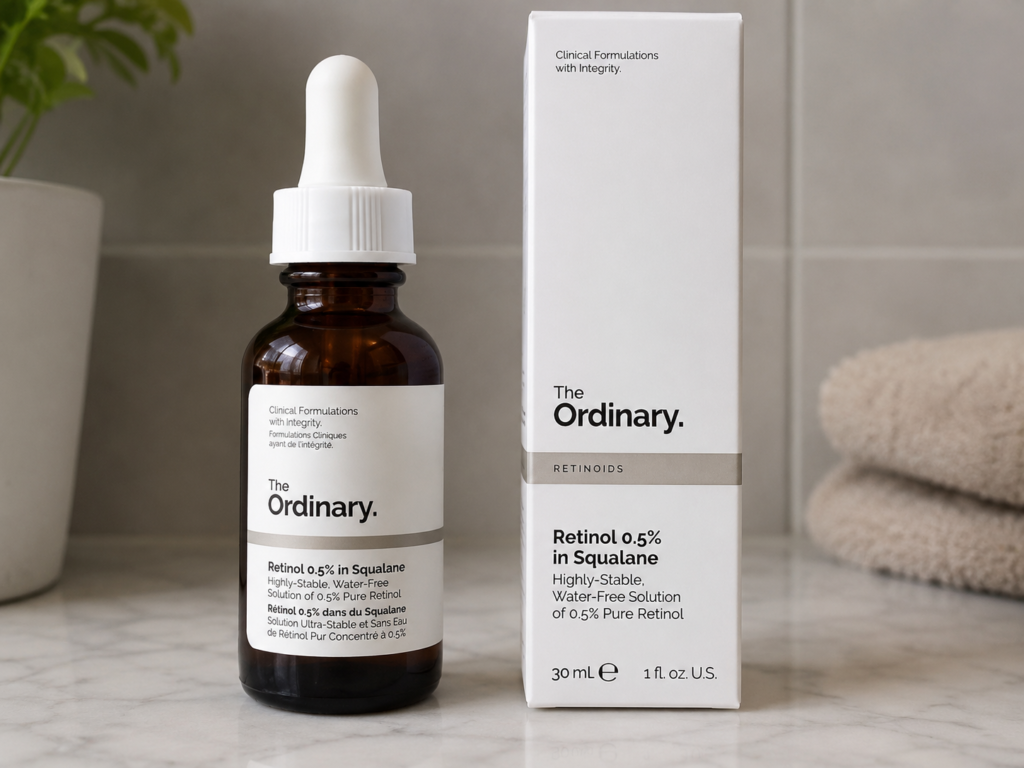
Retinol is an over-the-counter retinoid commonly found in skincare products sold at drugstores, beauty retailers, and dermatology clinics.
When you apply retinol to your skin, your body has to convert it into retinoic acid before your skin can use it. Because of this extra conversion process, retinol is gentler and slower acting.
Benefits of Retinol
Retinol is popular because it can:
- Improve mild acne
- Smooth fine lines
- Brighten dull skin
- Fade dark spots
- Improve skin texture over time
It’s often recommended for beginners because it tends to cause less irritation than prescription retinoids.
Downsides of Retinol
The tradeoff is speed and strength.
Because retinol is weaker than tretinoin, results usually take longer. You may need several months of consistent use before seeing dramatic improvements.
What is Tretinoin?
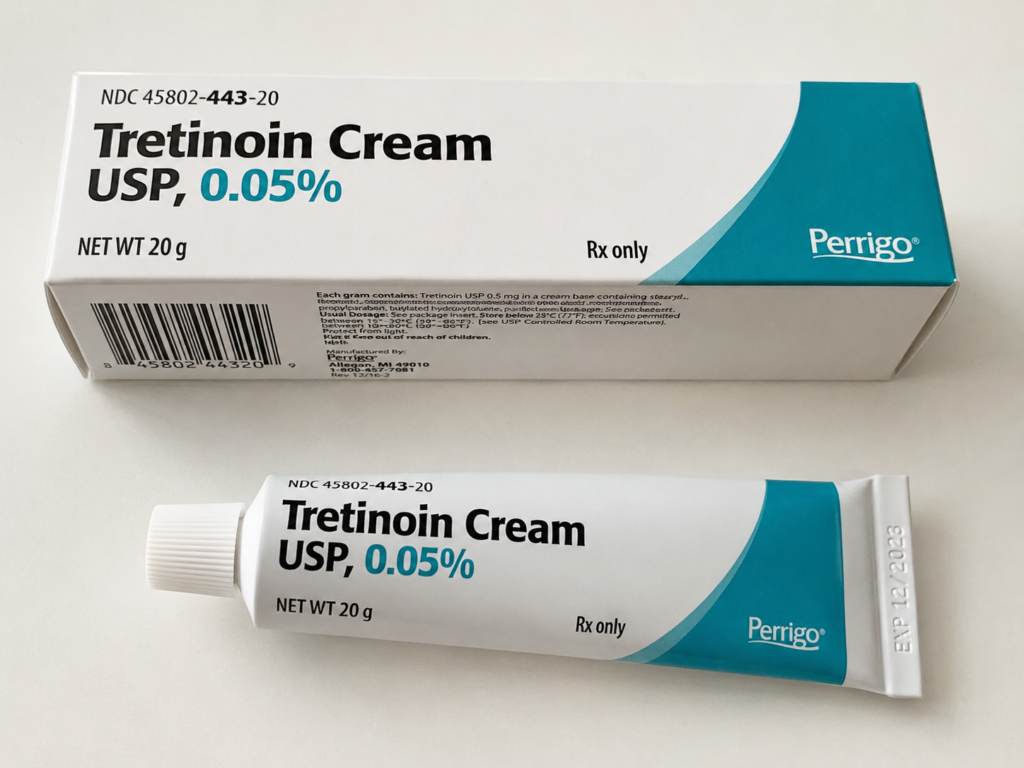
Tretinoin is a prescription-strength retinoid that is already in its active form: retinoic acid.
That means your skin can use it immediately without converting it first.
As a result, tretinoin works faster and more aggressively than retinol.
Benefits of Tretinoin
Tretinoin is widely used by dermatologists to treat:
- Moderate to severe acne
- Fine lines and wrinkles
- Sun damage
- Post-acne marks
- Uneven texture
Research on tretinoin is extensive, and it’s considered one of the gold-standard anti-aging ingredients in dermatology.
Downsides of Tretinoin
Tretinoin can be intense — especially when you first start using it.
Common side effects include:
- Dryness
- Peeling
- Redness
- Burning or stinging
This adjustment period is often called the “retinization phase,” where your skin adapts to stimulus provided by the medication.
The Differences Between Tretinoin and Retinol
| Feature | Retinol | Tretinoin |
| Available over-the-counter? | Yes | No (prescription) |
| Strength | Mild to moderate | Strong |
| Speed of results | Slower | Faster |
| Irritation risk | Lower | Higher |
| Best for | Beginners, sensitive skin | Acne, advanced anti-aging |
| Conversion needed? | Yes | No |
Which Is Better for Acne?
If you struggle with persistent or moderate acne, tretinoin is generally more effective.
However, many people with mild acne do very well with retinol products, especially when combined with good skincare habits.
Which Is Better for Anti-Aging?
Both ingredients can help improve signs of aging, but tretinoin usually delivers more dramatic results.
Studies consistently show that tretinoin can improve:
- Fine wrinkles
- Collagen production
- Skin firmness
- Sun damage
That said, retinol can still provide impressive long-term improvements with fewer side effects. If your skin is sensitive or you’re new to retinoids, retinol may actually be the smarter choice.
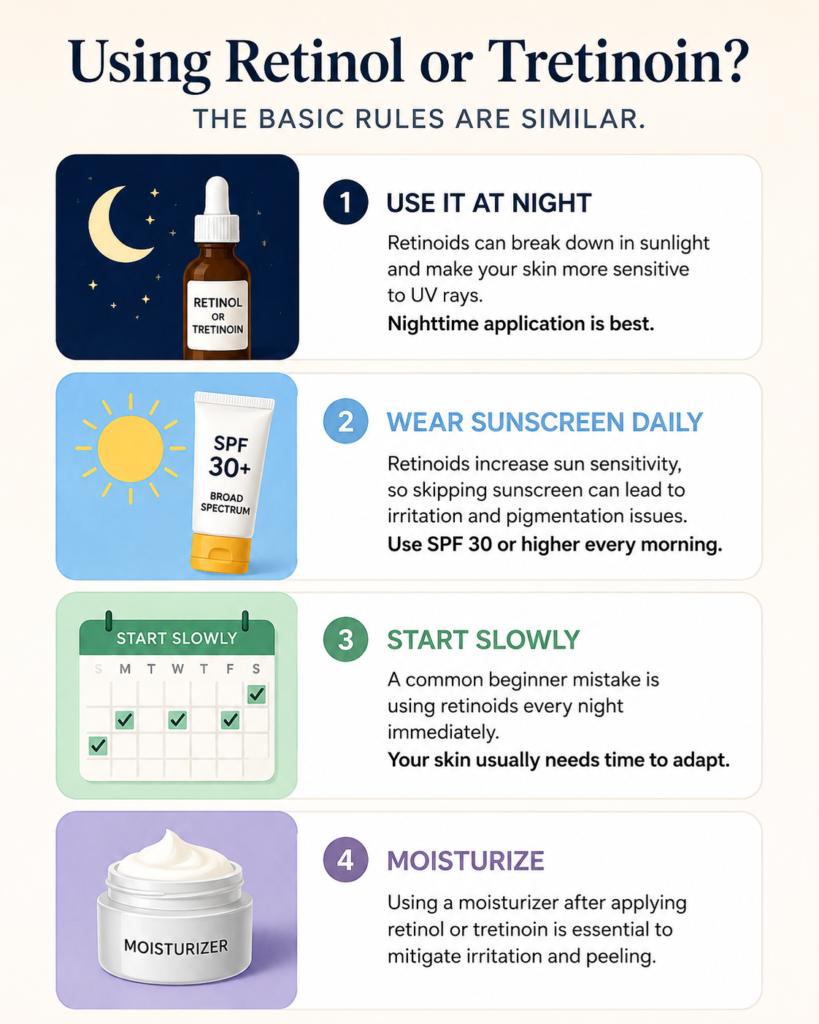
How to Use Retinol or Tretinoin Safely
Whether you choose retinol or tretinoin, the basic rules are similar.
Final Verdict: Tretinoin vs. Retinol
Here’s the simplest way to think about it:
Choose retinol if you:
- Are a beginner
- Have sensitive skin
- Want gradual anti-aging benefits
- Prefer lower irritation
Choose tretinoin if you:
- Have persistent acne
- Want faster, stronger results
- Can tolerate a more aggressive product
- Are working with a dermatologist
Neither ingredient is “better” universally. The right choice depends on your skin goals, sensitivity, and consistency.