How Stress Affects Skin
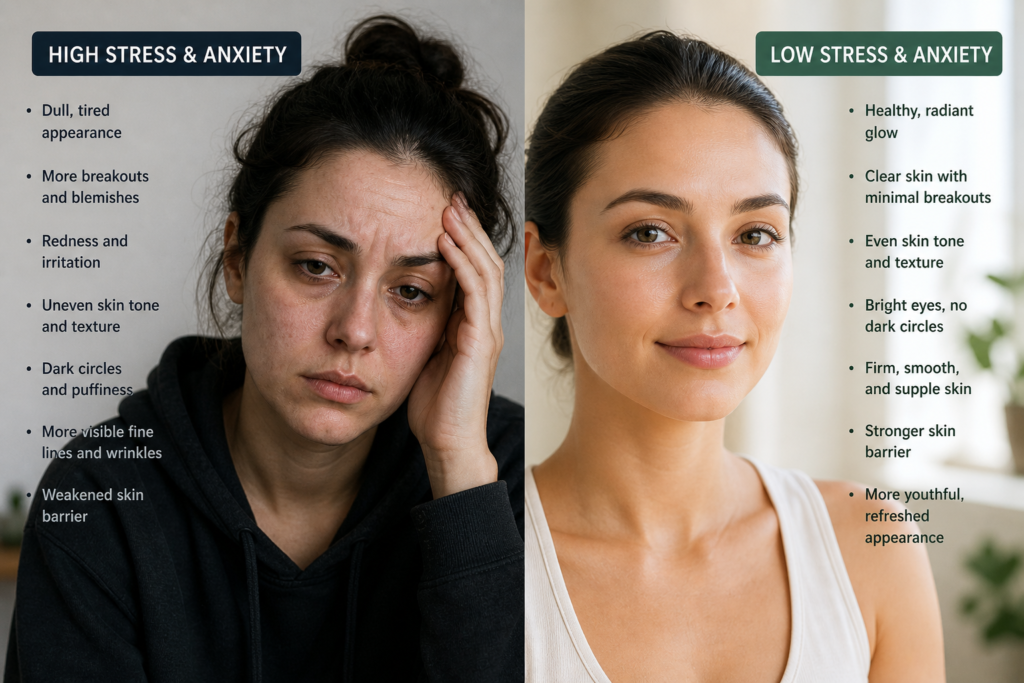
Stress and anxiety don’t just affect your mood—they shows up on your skin in visible, biological ways. When you’re under stress or feeling anxious, your body activates the hypothalamic–pituitary–adrenal (HPA) axis and releases hormones like cortisol. Elevated cortisol increases oil (sebum) production in the skin, which can clog pores and contribute to acne. It also disrupts normal skin cell turnover, meaning dead skin cells aren’t shed as efficiently—another factor that leads to breakouts and rough texture.
Beyond acne, stress and anxiety weaken the skin’s natural barrier (the outermost layer known as the stratum corneum). This barrier is responsible for retaining moisture and protecting against irritants, bacteria, and pollutants. When it’s compromised, your skin loses water more easily (called transepidermal water loss), leading to dryness, irritation, and increased sensitivity. This is why your skin might feel tighter or look duller during stressful periods.
Stress and anxiety also drive inflammation. Chronic activation of the stress response increases pro-inflammatory signals in the body, which can worsen conditions like acne and speed up aging. Inflammation also breaks down collagen and elastin, the proteins that keep skin firm and smooth. The result of this is fine lines, uneven texture, and a less “healthy” appearance over time.
There’s also a healing component. Research shows that stress and anxiety slow wound healing, meaning pimples, irritation, or any skin damage takes longer to recover. In the context of acne, stress and anxiety make lesions linger longer and increase the chances of post-inflammatory hyperpigmentation.
On a final note, stress and anxiety affect behavior in ways that indirectly harm skin quality. For example, stress and anxiety have a negative impact on sleep, which is when the skin undergoes repair processes. Elevated stress and anxiety can also increase cravings for high-sugar or processed foods, which may worsen inflammation.
What To Do About It
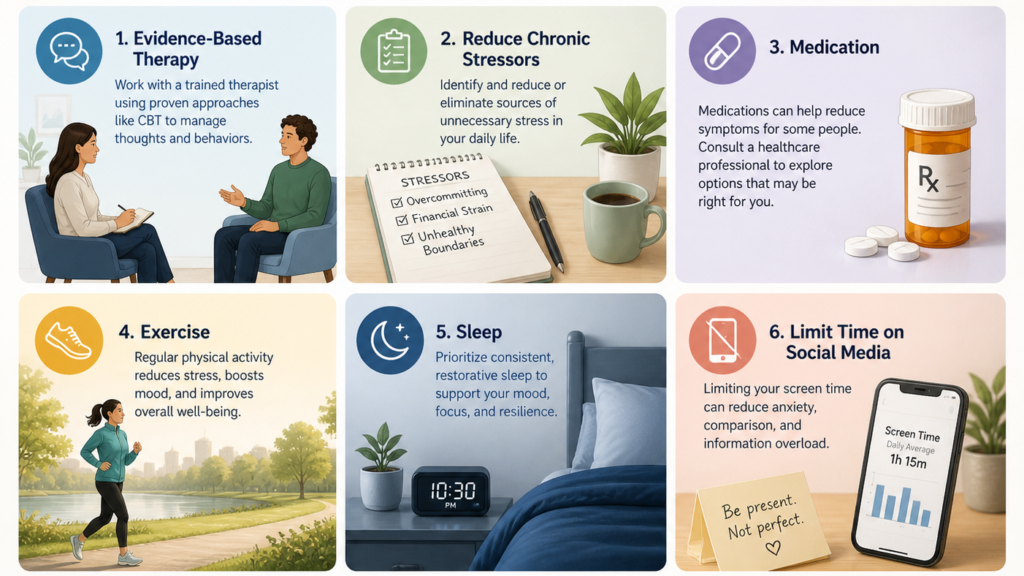
Here are the highest-impact teatments/things to do to reduce stress and anxiety:
- Evidence-based therapy — Engage in some kind of evidence-based therapy (particularly important for people with anxiety). I highly recommend the Unwinding Anxiety book/program, which helps you work on stopping habits that cause anxiety (e.g., worrying, trying to do things perfectly).
- Reduce chronic stressors — Make a list of the chronic stressors in your life and plan to mitigate or resolve them. Examples of chronic stressors include financial strain, a stressful job, a difficult relationship, and living with a chronic illness.
- Medication — Medication will not address the root cause of your stress and/or anxiety, but I’m a fan of it because it is easy to do and can make a noticeable difference.
- Exercise — Exercise is a phenomenal way to reduce stress and anxiety because it puts your body in a rest and recover state if the workout is intense enough.
- Sleep — Sleep helps regulate the brain’s emotional centers so you react less intensely to stress and anxiety triggers. It also restores neurotransmitter balance (like serotonin and dopamine), making it easier to stay calm and resilient during the day. Prioritize the quantity and quality of your sleep.
- Reducing time spent on social media — Moderating time spent on social media helps with avoiding information overload and maintaining the pain-pleasure balance in the brain, which can significantly decrease stress and anxiety.
Do more research into each of these to learn more.