Why Tretinoin Is So Effective and How To Use It
Why Tretinoin is So Effective
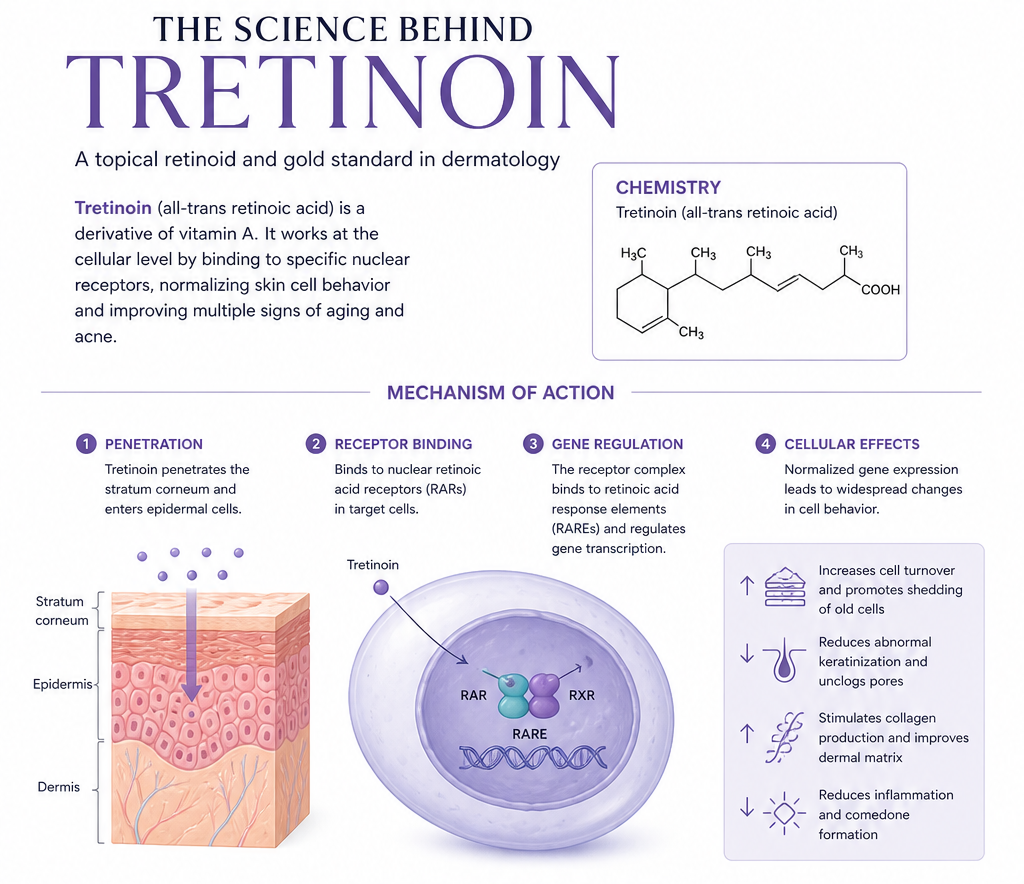
Tretinoin (a prescription-strength retinoid derived from vitamin A) is widely considered one of the most powerful topical treatments for improving skin quality. It works at a cellular level by increasing skin cell turnover, meaning it helps your skin shed old, clogged, or damaged cells more quickly and replace them with new, healthy ones. This significantly accelerates the process of acne lesions “going away”, results in a smoother skin texture, and reduces fines lines.
Tretinoin also stands out for its long-term impact. Unlike many skincare products that provide temporary improvements, tretinoin actually changes how the skin functions. It stimulates collagen production, which helps keep skin firm and youthful over time. Because of this, it’s often considered the “gold standard” in dermatology for both acne treatment and anti-aging.
One often overlooked benefit of tretinoin is its ability to fade post-inflammatory hyperpigmentation (the dark marks left after acne). By accelerating skin turnover, it helps gradually lift excess pigment and even out skin tone. This makes it especially valuable if your main concern isn’t just active acne, but the marks that linger afterward.
How to Use Tretinoin Properly
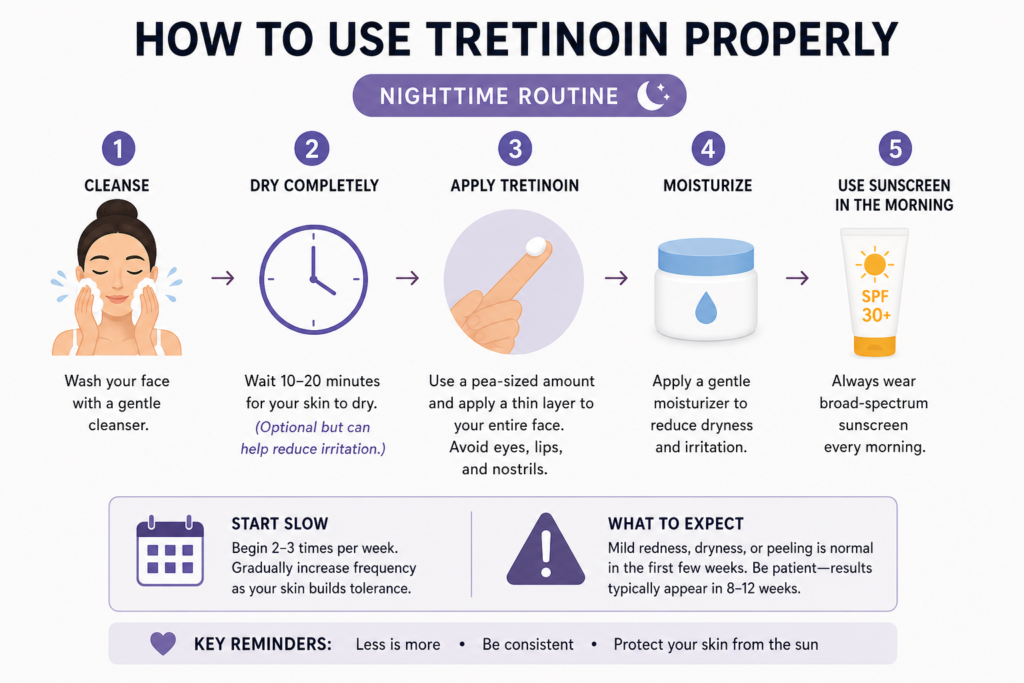
When starting tretinoin, it’s important to take it easy. After cleansing and fully drying your skin, apply a pea-sized amount to your face at night. It is best to apply tretinoin at night because it makes your skin more sensitive to the sun. Beginners should start using it 2–3 times per week, then gradually increase frequency as their skin builds tolerance.
If your skin is sensitive, you can use the “moisturizer sandwich” method—applying moisturizer before and after tretinoin—to buffer irritation while still getting results. Over time, as your skin adapts, you may be able to apply it directly to dry skin without this step.
During the first few weeks, it’s normal to experience some dryness, redness, or peeling. This can be managed by using a gentle moisturizer (before and/or after applying tretinoin) and avoiding combining tretinoin with other potentially irritating products (like strong exfoliants) early on.
Lastly, applying sunscreen every morning is critical. As noted, tretinoin makes your skin more sensitive to the sun, which means that skipping sunscreen can cause serious damage to your skin.
When used consistently and correctly, tretinoin can dramatically improve your skin, especially if you have or have had acne in the past. Most people start seeing noticeable results after about 8–12 weeks.